
Aki and I approached Kamakura’s Tsurugaoka Hachiman-gu shrine through the Ni no Torii (second gate). Gravel crunching loudly under our feet, we walked the dankazura (a raised avenue) between the already leafless cherry trees as people have for centuries.
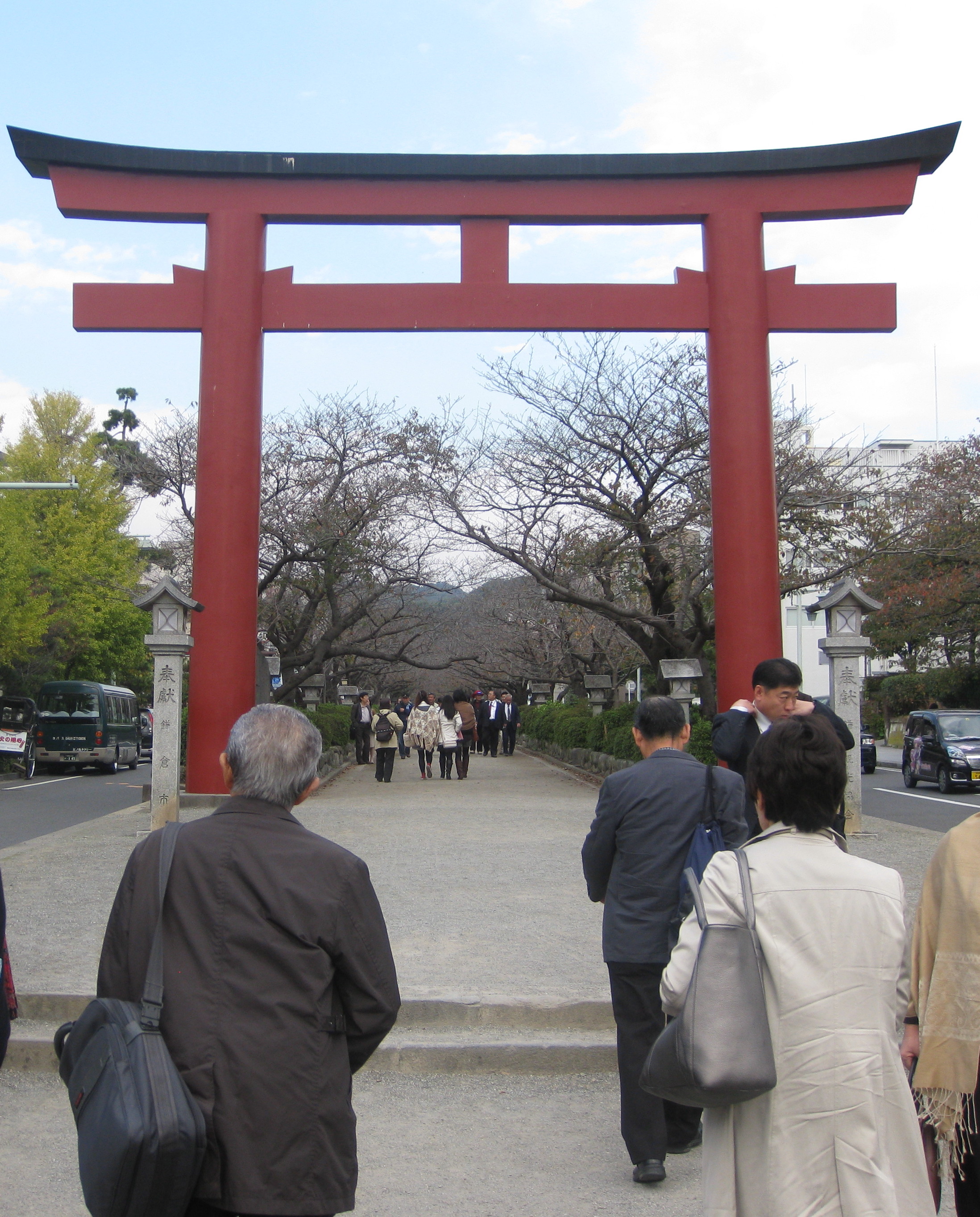
Torii (gate) and dankazua (raised pathway flanked in cherry trees)
To our surprise a marriage ceremony is under way in the Maiden, or open pavilion in front of the shrine where performances of various kinds and weddings are held.
Along with others who have gathered to watch, we witness the exchange of rings, the family vows and sake ceremony that are part of a traditional Shinto wedding.

A traditional offering of tamagushi (sacred branches)
Later, after viewing the main shrine and drawing our fortunes—I get daikichi or great good luck—we see the young couple about to ride off in a rickshaw. They look so rich and smart and pleased with themselves in their wedding finery. They’re young and beautiful. Now she can’t be called kurisumasu keki (left-over Christmas cake, stale and not wanted after 25).
Alas, often marriage, too, goes quickly stale. I wish them great good luck.
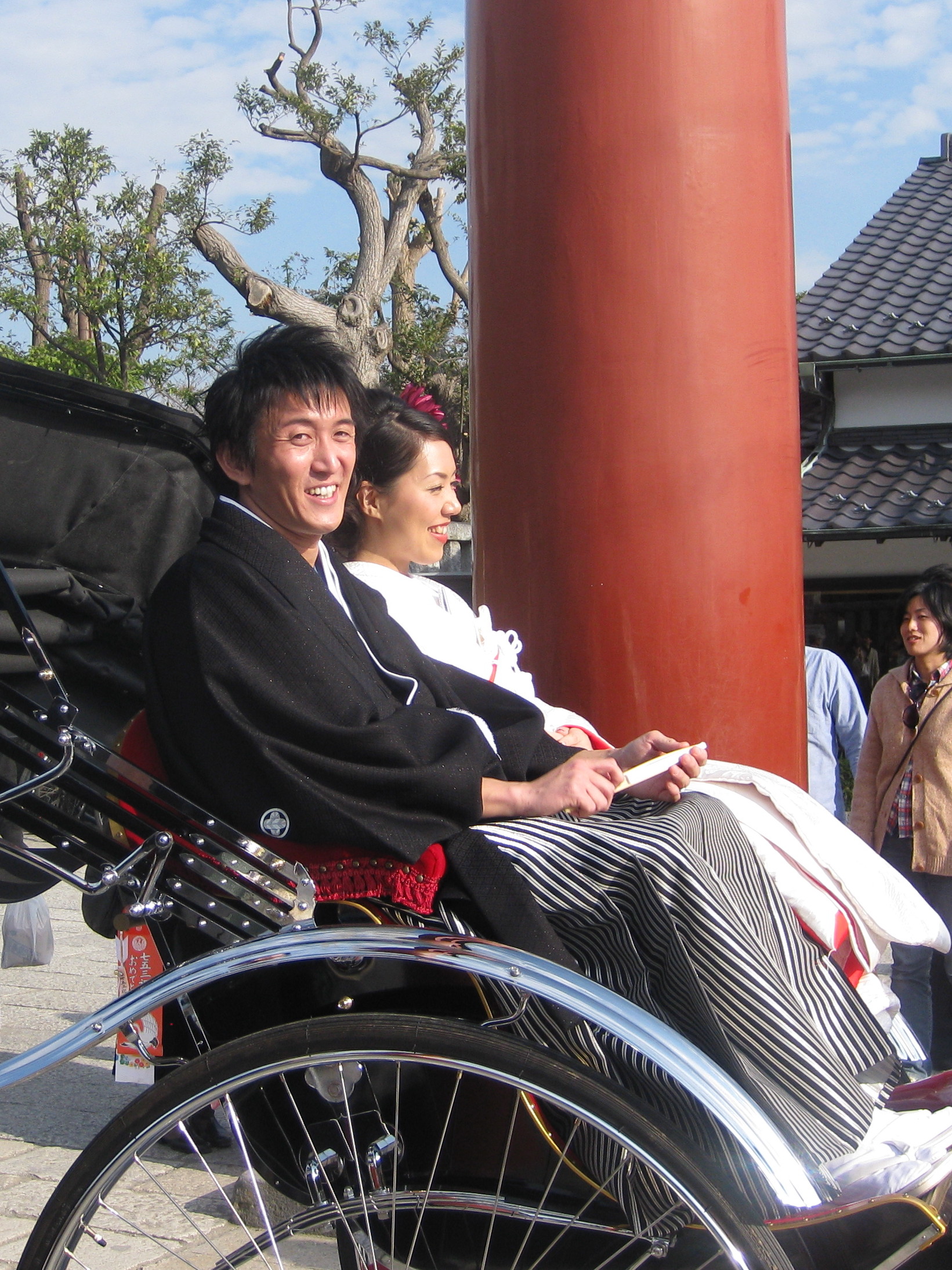
The happy newly weds.
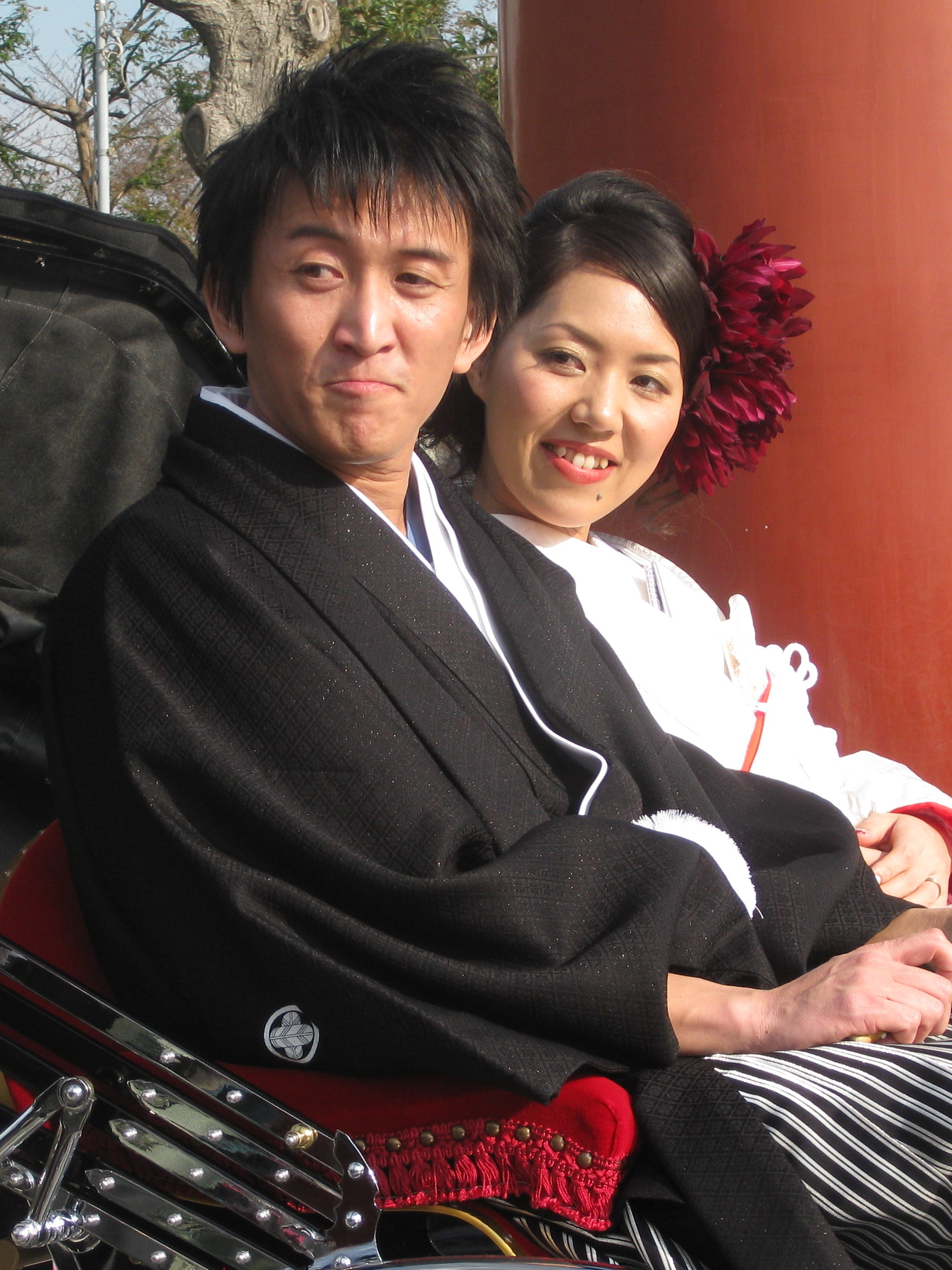
Just married.
2 Responses to A Wedding in Kamakura