Also on Instagram @lyndawow.
Words, of course, are the most powerful drug used by mankind.
- Rudyard Kipling
-
Recent Posts
What interests you?

The effect of numerous losses and restrictions this pandemic entails has been especially difficult for some creative people. Others have learned new skills, come into their creative groove and accomplished great things; but not all. It’s especially difficult those who haven’t been able to find their métier during this crazy-making time. It’s also one reason for a long silence on this platform.
Still, it is possible to find a renewed joy that merits champagne and dancing. It is possible to realize that whatever has not measured up to dreams and aspirations once held doesn’t matter. What counts is the pathway walked–even while lost and confused, grabbing at this distraction after that or burying into the blankets.
Eckhart Tolle offers this:
Anything you accept fully will take you into peace. This is the miracle of surrender. …allow this moment to be as it is. And then, suddenly, where before there was irritation, there is now a sense of aliveness and peace. And out of that comes right action.

That action for me is to carry on. Not without nostalgia. But for the time being I bless and bid farewell to numerous aspects life formerly enjoyed. In its place I experiment. I welcome this and that or the other thing until something clicks. Meanwhile I practice multiple levels of self-care, appreciate the richness in little things and create beauty any opportunity I can find to do so. Thus, I carry on–with all the gratitude, grit and grace I can muster. That’s all I can do. Surprise. It’s enough.
According to Definitions from Oxford Languages the word beige is French. First appearing in English usage in the mid-19th century, it denotes the colour of unbleached and undyed woolen fabric.
Surveys indicate that it is the single colour of paint favoured by a majority of Canadians, a statistic that prompts more than a little derision of our design sensibilities in some quarters as hopelessly safe and boring and twee.
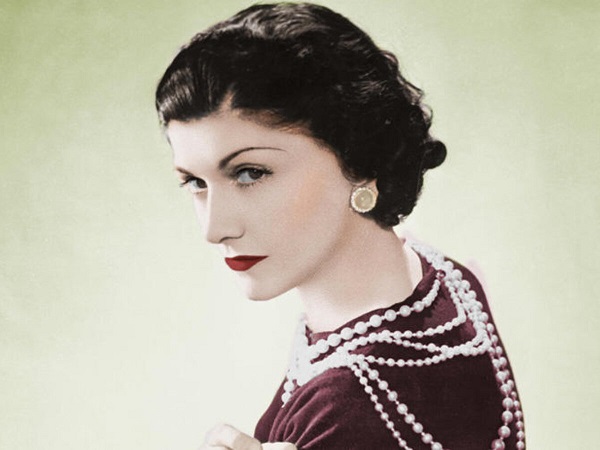
Gabrielle (Coco) Chanel found beige simple, sophisticated and elegant. She said, “I take refuge in beige because it is natural.” I agree. Over my lifetime I have experimented with many colour schemes; however, none have been as soothing or as stimulating as the rich beige palette I’ve enjoyed in my home for the past 10 years.

BEIGE, is also a fragrance in the extensive Chanel line-up (though not as famous as Number 5 or 19), and is described on the Chanel Online Boutique website as “voluptuous, with an intense hawthorn-freesia-frangipani accord subtly enhanced with honeyed notes.”
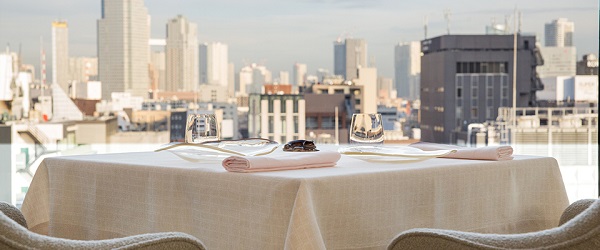
I first discovered the scent in the powder room of Michelin starred Beige Alain Ducasse Tokyo at the top of the Chanel Ginza Building. My friend Vivian wished to celebrate her birthday there three years ago, and who was I to argue with the brilliant logic of a luxury writer for the New York Times wishing to show me the town? Nor did I demur when she suggested we repeat the pleasure when I returned to Tokyo to continue my studies 9 months later.
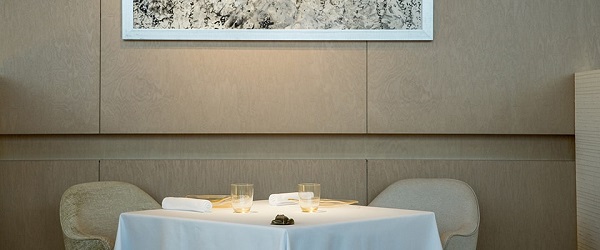
Hours later, utterly satiated we wine-floated out into the late Tokyo afternoon. Ever since, I have regretted resisting the urge to purchase a bottle downstairs when I had the opportunity. I meant to rectify that oversight when I returned to complete my student level ikebana studies in spring of 2020. Unfortunately, thanks to the coronavirus I left Tokyo with both my studies and my shopping wishes dashed.

On my return to lockdown and emergency restrictions, I could not continue my ikebana studies. Nor could I purchase BEIGE in Canadian stores. Fortunately, that circumstance was easily managed with a card and a click. Chanel Online Boutique could and did ship a chic black and white package to my door which arrived this week, perfectly timed to my birthday.
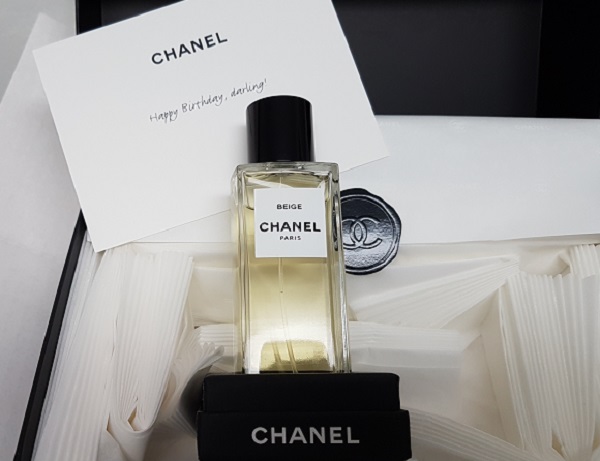
Who said happiness can’t be bought? Whoever it was, they were wrong.
After a light spray, if I close my eyes I can believe that I have stepped again into that late Tokyo afternoon drenched in honeyed memories of hawthorn-freesia-frangipani happiness. Happiness is BEIGE. Happy Birthday to me!
Photo Credits to Chanel Online Boutique and Beige Alain Ducasse Tokyo websites.
With little to offer recently, I’ve decided to share an item from James Clear whose newsletter crossed my desktop this morning. He selected an excerpt from Alice Walker’s Living by the Word: Essays. It says almost everything I haven’t articulated–and better.
*
“Some periods of our growth are so confusing that we don’t even recognize that growth is happening. We may feel hostile or angry or weepy and hysterical, or we may feel depressed. It would never occur to us, unless we stumbled on a book or a person who explained to us, that we were in fact in the process of change, of actually becoming larger than we were before.
Whenever we grow, we tend to feel it, as a young seed must feel the weight and inertia of the earth as it seeks to break out of its shell on its way to becoming a plant. Often the feeling is anything but pleasant.
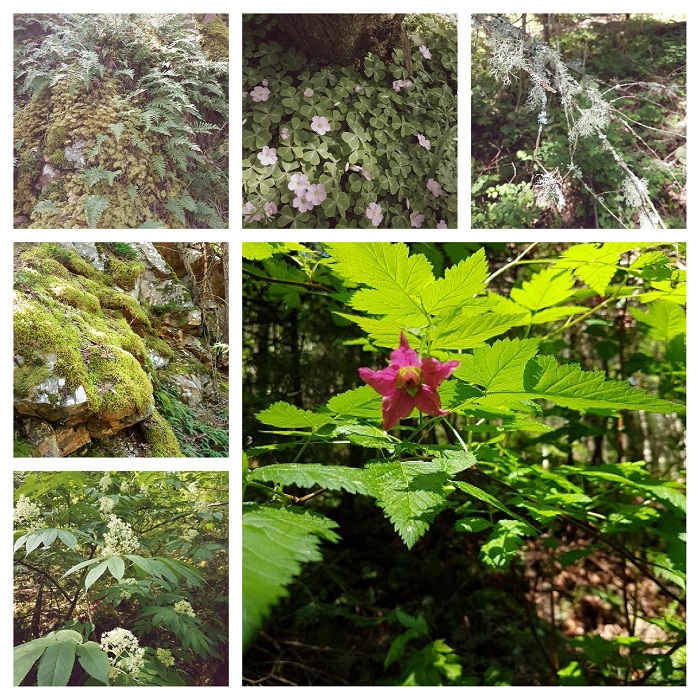
But what is most unpleasant is the not knowing what is happening. Those long periods when something inside ourselves seems to be waiting, holding its breath, unsure about what the next step should be… for it is in those periods that we realize that we are being prepared for the next phase of our life and that, in all probability, a new level of the personality is about to be revealed.”
Just as I savour carols in the weeks before Christmas, at this time of year I turn to acapella Lenten choral traditions and the liturgical music of Easter. Agony expressed by the naked human voice.
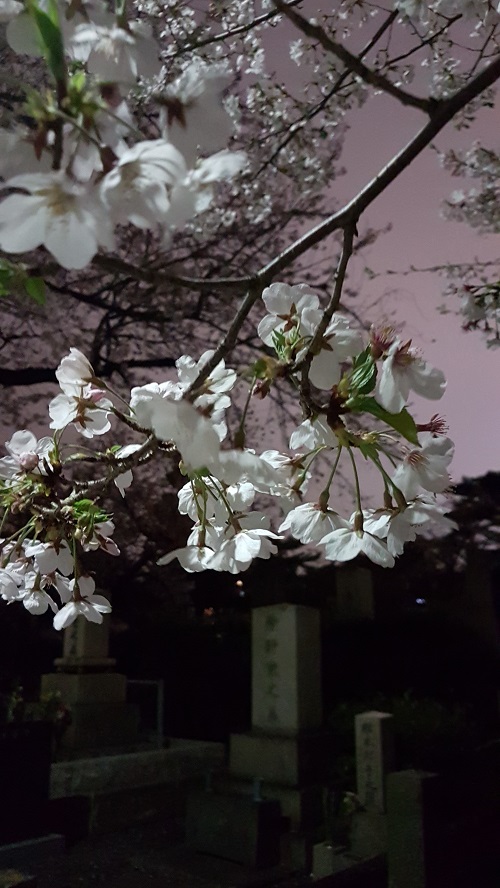
You’d think in might deepen the anguish carried in a battered heart. Instead, it consoles.
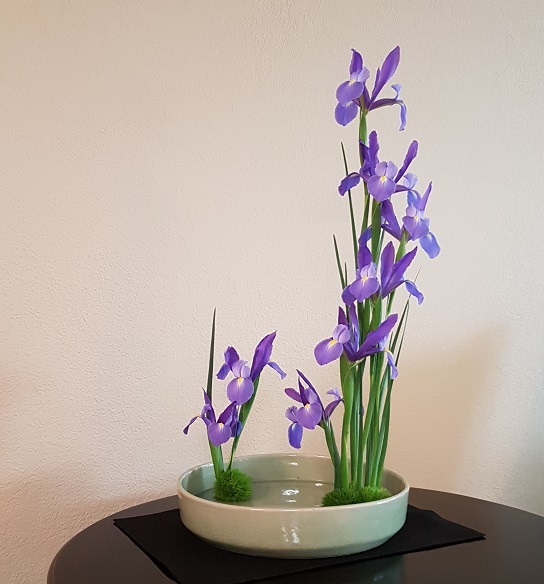
Lifted in exquisite layers of harmony and polyphony, voices affirm that I am not the only one who suffers.
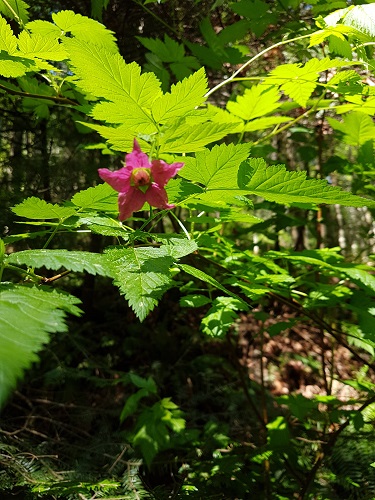
Beauty remains a constant consolation no matter what else fails.
On YouTube: Transcendent Lenten Choral Music
On Spotify: Good Friday in Jerusalem; Russian Calvary. Men’s Choir of the Valaam Singing Culture Institute; J.S. Bach Easter Cantatas and St. Matthew’s Passion

Recently my friend A and I share the numerous ways we’ve struggled through while under the pall of the pandemic. She writes: It´s difficult to find something rewarding that at the same time challenges you and makes you feel content, even happy. At this time, I just miss Cheez Doodles, and they would make me even fatter. Had this dream that I was swimming in a sea of Cheez Doodles, but of course I wasn’t moving forward, I was busy stuffing myself. I have never felt happier.
Thankfully it was all a dream. She adds that so far the Cheez Doodles have stayed out of her grocery cart.
I understand. Mid-January, stuck and struggling in the muck (desperately praying it is not quicksand) I run away to Bridgerton.

There I binge in a sea of episodes, interviews, reaction videos, as well as behind the scenes production notes on costumes, dances, special effects and the rest. Every second in Bridgerton I feel happier. With a touch of self-mockery I rationalize the ridiculousness of it all as an option marginally superior to alcohol.

But after reading A’s dream I laugh and let go of the self-reproach. The Duke of Hastings is my kind of Cheez Doodle. Nothing more.
Here’s to stuffing myself. Shameless and shame free. To more happiness whatever its guise.
A little lost for things to do during these pandemic doldrums—long, static, monotonous internal weather where the parched psyche longs for the sensation of movement, even a molecule nudged up, forward, around.
Into that stasis a question appears. What was I doing at this time in 2018 during my final two weeks at Sogetsu Kaikan? Easy enough to check. Initially I resist looking back thinking that it isn’t likely to be a helpful exercise when I yearn to move forward; however, it is a molecule and back is also a direction.
I had completed three two-hour classes that day. The first assignment was 2.15 Slanting Style Variation No 6 Nageire for which I chose a white container with pale green accents in the glaze, Japanese quince branches, white spider chrysanthemums with green deep green centers and used crossbar fixing.
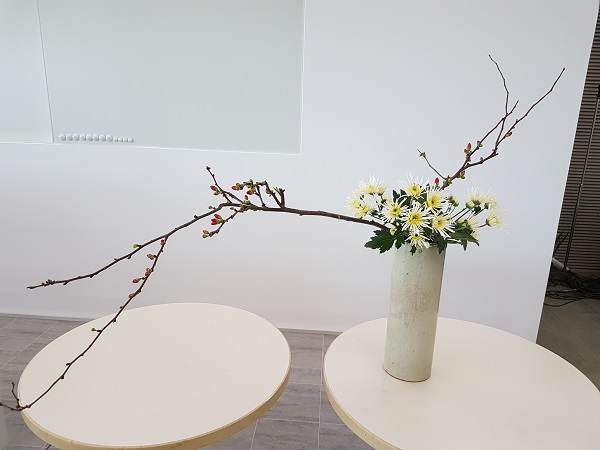
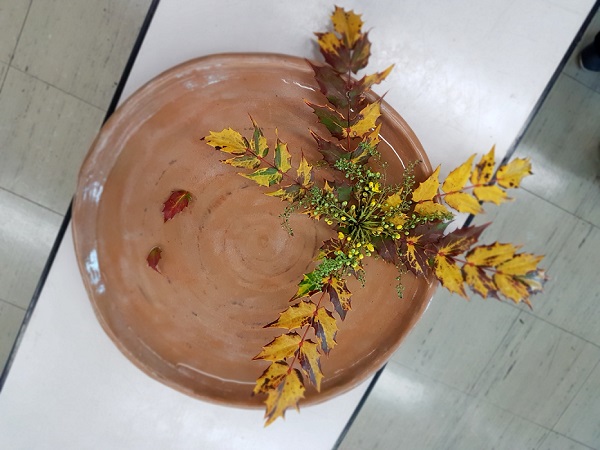
The second lesson was Variation No.7 Floating Arrangement and Spreading Morimono Arrangement which required two arrangements in a single lesson. For the first requirement I floated a few leaves I removed from a splendid muscular branch of Mahonia Japonica in a large, brown suiban.
For the second spreading arrangement the remainder of the branch lay splendidly on the worktable. Sometimes, by great good luck the natural material does the work of creating line for me. However, it is not enough to toss it there and call it finished.
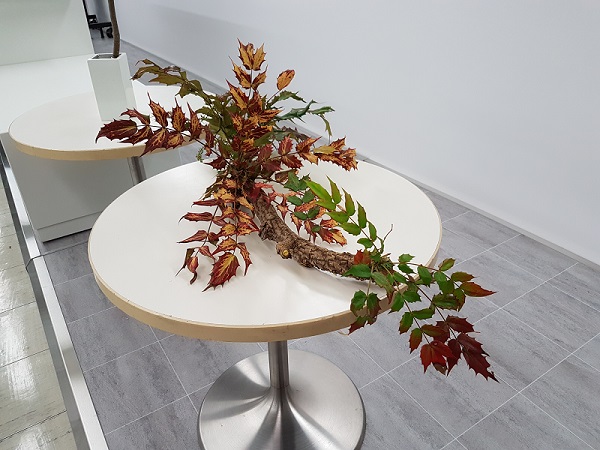
I deconstruct the foliage and fix it to the branch more artfully than nature has done. By another stroke of fortune a single yellow bud signals a future still invisible emerging from the fading, russet past–a highly desirable trope in ikebana.

During the evening class, Lesson 2.17 Variation No. 8 Combined Styles Moribana & Moribana. Being quite drawn to unusually moody flowers I choose magnificent near-black orchids together with branches of budding Japanese raspberry. These I fix in kenzans inside black containers.
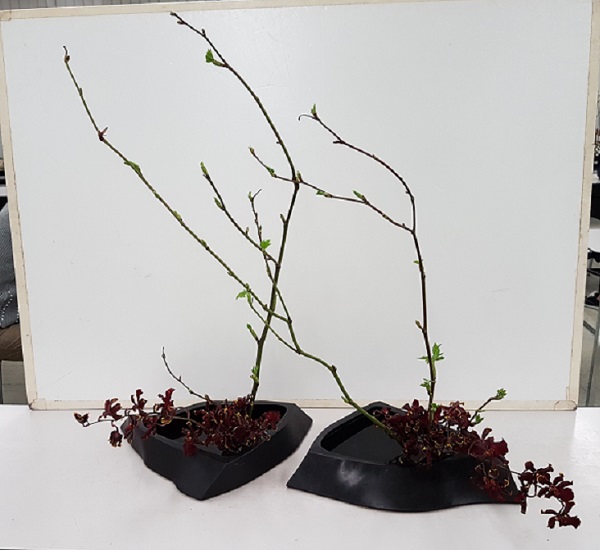
Again, the symbolism suggests emergence from the depths of winter which will culminate in fruit.
Hmmm. How apposite this reminder. Fruition is my theme word for 2021. How ironic. By stepping back into my history—the early days of my progress as an ikebana student and artist–seeing anew the symbolism of the budding branches, I am reminded of the relentless, invisible forces quite outside what appears to be stasis.
I also remember well the endorphin rush during the creation process kicked into overdrive by Okazaki-sensei’s unrestrained compliments for my burgeoning abilities and excellent understanding of ikebana. Today, I touch that, feel it once more–as well as greater serenity for the unknowable future..
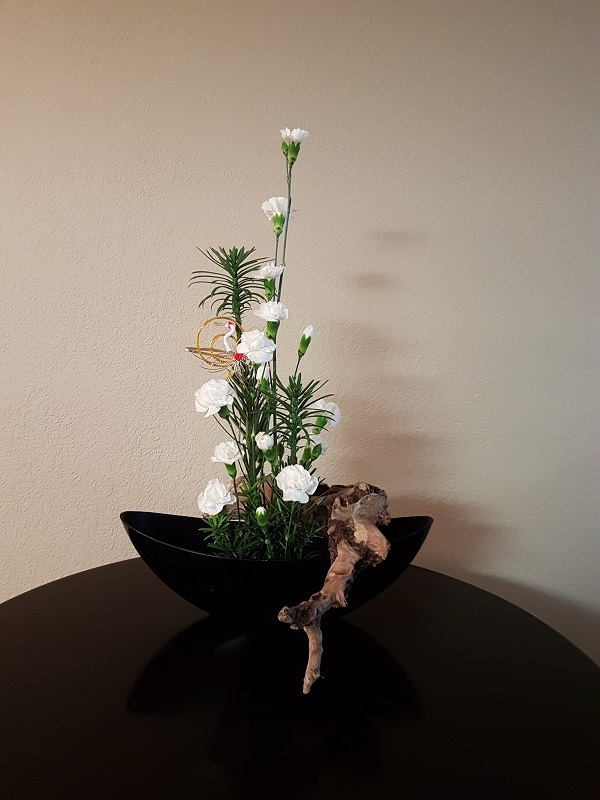
Festive arrangement for New Year with Japanese yew, elegance carnations, crane ornament and driftwood.
*
On Instagram @lyndawow
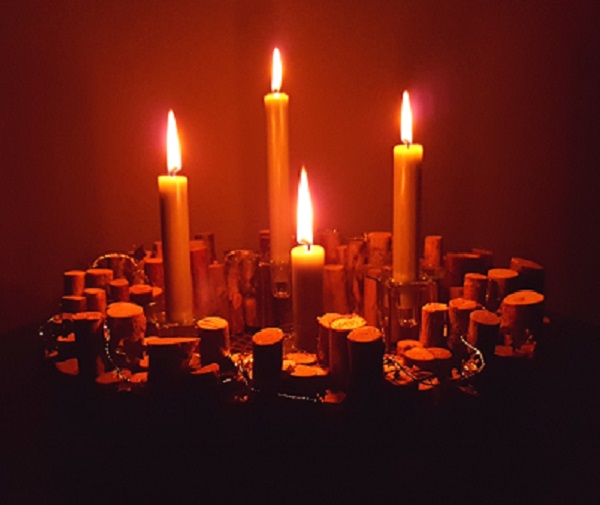
As the last strains of carols wafted through my home late in the evening on Christmas Day, I scanned the room enjoying the decorations, the lights sparkling on the balcony and the glowing tree. Though it was a solo celebration, it had been a serene, joyful and satiating Christmas.
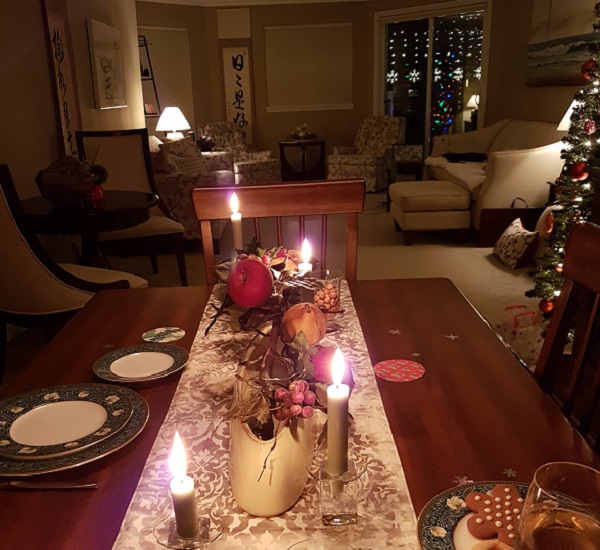
Not to be defeated by a pandemic and all the irksome aspects that entails, I’d created a proper binge of traditional dishes, champagne, wine, nuts, Japanese mandarins and favourite cookies. As I considered the physical and mental energy required to do it up properly, I was glad that I didn’t have to mount it up again. It was done.

Instead, I could happily return to simpler fare, dial back the sugar load and coast along grazing from a well-stocked fridge.
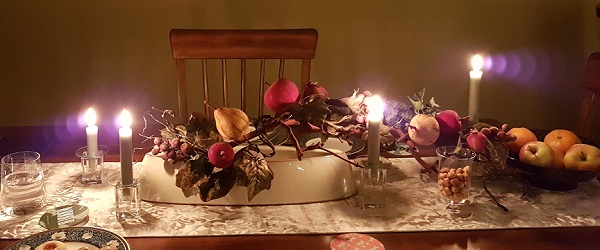
Oddly enough, as wonderful as Christmas (my favourite time of year) is, I was also looking forward to putting it back in the box.

Having spent the last four months living in a heightened state of mindfulness, I note that there are parallels to Christmas. I note many positives: improved perception, greater efficiency, as well as more serenity and beauty in any mundane task.
However, more than that I put a greater value on small things that carry great significance. Prior to this mindfulness experiment I blew off the hundreds and thousands of minuscule moments as insignificant and irrelevant.
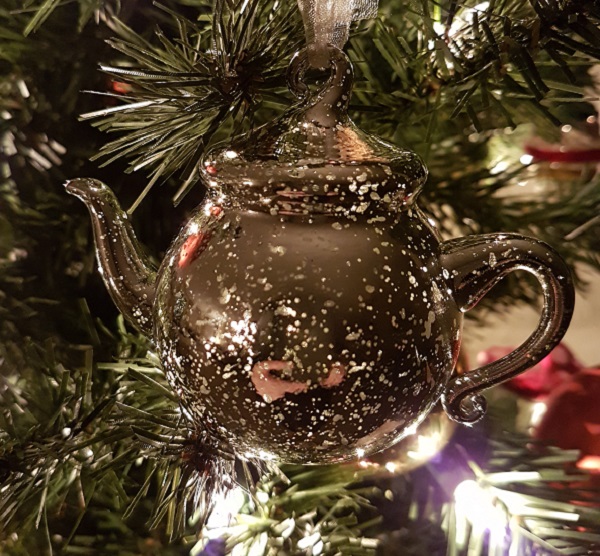
But living in a state of intense awareness for an extended period, like a drawn out seasonal celebration, also has a saturation point. Just as I didn’t expect to have more time to fill as the result of a mindfulness practice, I also didn’t expect to be bored by an overload of wonder.
The first cup of coffee sipped with total concentration or the first glimpse of Mars moving across my west window seemed miraculous marvels. The fifth or tenth not so much. And while I accepted that surprising insight without self-reproach, it didn’t feel like success.
Rumi wrote: Every moment contains a hundred messages from God.
As poetry, that’s poignant. But one hundred messages—even from God—is too much information. Divine spam. My default impulse is to click delete. Swipe left. Wonder palls, becomes ordinary and it’s all too easy to find it blasé. I confess, I hadn’t expected that.
Will I end the mindfulness experiment? No. Not entirely. Not yet. There’s merit in paying more attention, in being more open to the wonder in the mundane, in seeing things anew. But I realize there’s also an appropriate time to put Christmas back in the box.
*
Now you can also find me on Instagram @lyndawow
In spite of a long chain of significant heartbreak and grief, for many years now I have cultivated a Buddha (level) mind and lived a joyful life—often while walking hand in hand with sorrow. Even as I rattle and multi-task through the days, ecstatic moments of serenity and insight are a normal part of how I live.
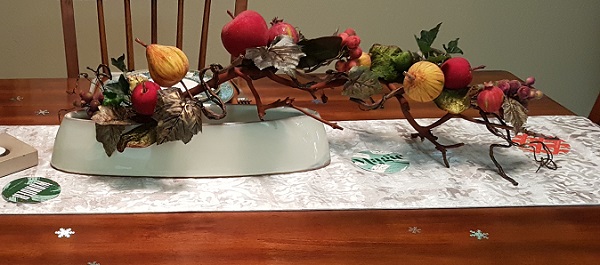
Christmas Table Arrangement with Artificial Fruit
Therefore, when I undertook this experiment to live mindfully in every aspect, my main expectation was that it would serve to fill empty hours of pandemic time not occupied by concerts or events. By doing one thing at a time and sinking into a deep awareness, a task would stretch out. I wouldn’t arrive at the end of my daily to do list with empty evenings spent on Instagram, YouTube or Netflix.

Ingredients Mise en Place for a Braise
Ha! Wrong.
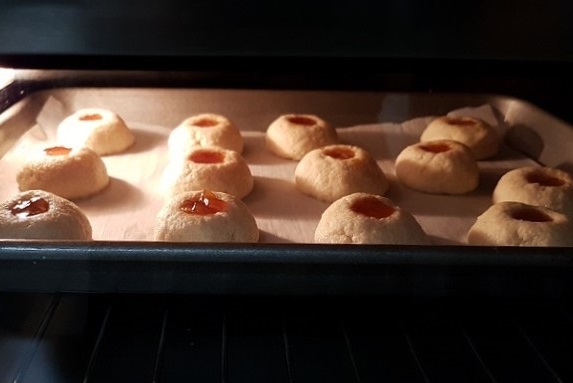
Thumbnail Cookies Baking
That surprising assumption was debunked in the early days of my experiment. By working mindfully I am able to accomplish more in less time. Simultaneously emptying the dishwasher while sipping my coffee, filling the compost and preparing the trash for takeout is not efficient. Ack! When done singularly and mindfully savoring the sensory elements of each, stuff takes less time. Much less.
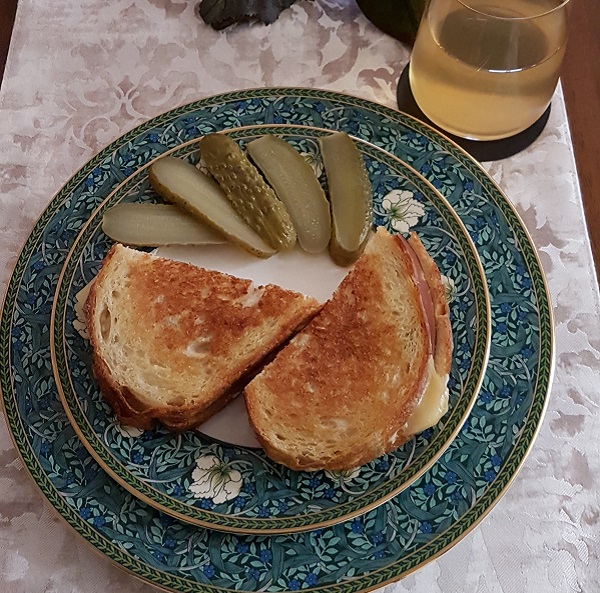
A Simple Lunch: Grilled Ham & Cheese
More than that, mundane chores such as dusting, making the bed, washing a floor, cooking and baking offer an unexpected sense of wonder. Whereas I previously I blasted through such routines with careless disregard, now I am much more attuned to the dynamic force in deliberation and stillness. Bonus: I enjoy greater gratification and serenity living this way.

Tourtiere Filling Ready for the Freezer
Happy surprise. Simple tasks performed mindfully cease to be jobs on a to do list. Rather, they are stepping stones to a state of extraordinary bliss. Now, what about those evenings?