A week ago the sakura surrounding Thunderbird Plaza in Abbotsford were still in bud.
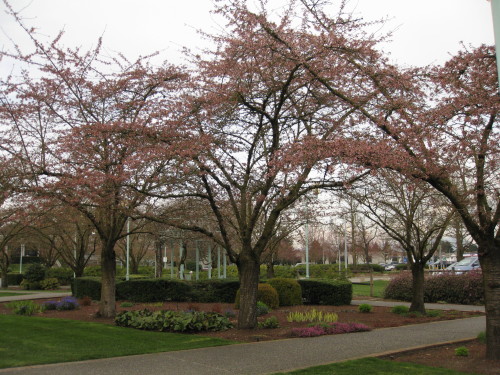
Sakura buds about to burst in Abbotsford, BC
Now they are at their peak. Continue reading

A week ago the sakura surrounding Thunderbird Plaza in Abbotsford were still in bud.
Sakura buds about to burst in Abbotsford, BC
Now they are at their peak. Continue reading
What did the Rolling Stones sing? Baby, baby, baby, you’re out of time. Story of my life. Here I am in an autumnal blog sequence as the sakura (cherry blossoms) are hitting their stride in my home town. Just one more example of mono no aware (the pathos of things). Continue reading
The sunshine and intense autumn colours added to the fact that it’s a weekend have Kyoto’s major attractions clogged with traffic and hordes of sight-seers. However, Inoue-san has no problem as he speedily navigates his scraped and battered little car through narrow streets. Continue reading
I first stood at the massive pillars of Nanzenji Temple’s Sanmon Gate in the late afternoon after walking from Ginkakuji (The Silver Pavilion) along the Philosopher’s Path. The overcast skies under which we’d started now pelted us with rain. Our group’s enthusiasm for one more temple, even one of the most important Zen temples in all of Japan, had vanished. We called it quits.
On my second attempt, a fine spring afternoon, I planned to walk the short distance from Yasaka Shrine to Nanzenji and enjoy a leisurely visit to the temple alone. However, Continue reading
John Lekich is a finalist in the running for the Sheila A. Egoff Children’s Literature Prize (under the umbrella of the annual BC Book Prizes) for his novel The Prisoner of Snowflake Falls. I commented on the book here before its launch and reprise it in honour of the announcement.
* * *
The Prisoner of Snowflake Falls is a book rich with simple complexities and deadpan one-liners that brilliant comics will wish they had written. Continue reading
We cry out for what we have lost, and we remember you again.
(Leonard Cohen)
The fall colours tumble down the hillsides of rural Kyotamba as Kyoko (my friend and hostess for a week) and I take a delightful drive toward Tango via secondary roads. We are off to Maizuru, a seaport on the northern shore of Japan.
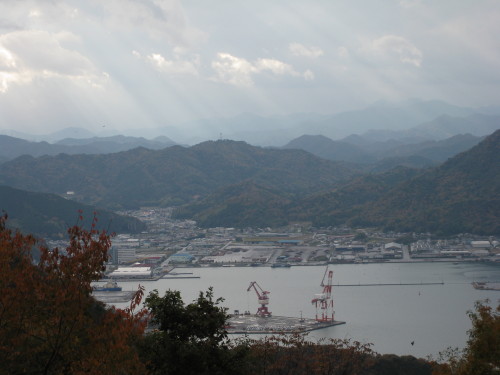
Maizuru Port
Hiro and I lag behind the Japanese-speaking tour group being led through Nijo-jinya. They don’t seem to mind and aren’t making any overtures for us to hurry up or join them. Great. No need to feel rushed or obliged to keep up. Nor do we have to worry about seeming rude. Our conversation in English won’t bother them.
I’ve always wanted to see Nijo-jinya since reading about the Edo period (1603-1867) inn. It’s equipped with state-of-the-art security devices of that era—secret passages, hidden staircases, false walls—to protect the feudal lords who stayed there. As it is now a private residence, all visitors to Nijo-jinya must make reservations for scheduled tours. Continue reading
One of Kyoto’s great treasures is not found among the famous temples, gardens, museums, galleries or various artisan’s shops. Rather, it’s a largely unsung and little-known club with no splashy website: International Service Club (ISC) Kyoto. Continue reading
Kyoko chatters as she steers the car along a narrow road through the cedars. Their unmistakable scent born of long, dry heat fills the air. Shafts of light pierce the spaces between the trees. While drinking in this sensuous splendor I fight the urge to panic as the car’s right wheel gets closer and closer to the tiled ditch. Continue reading